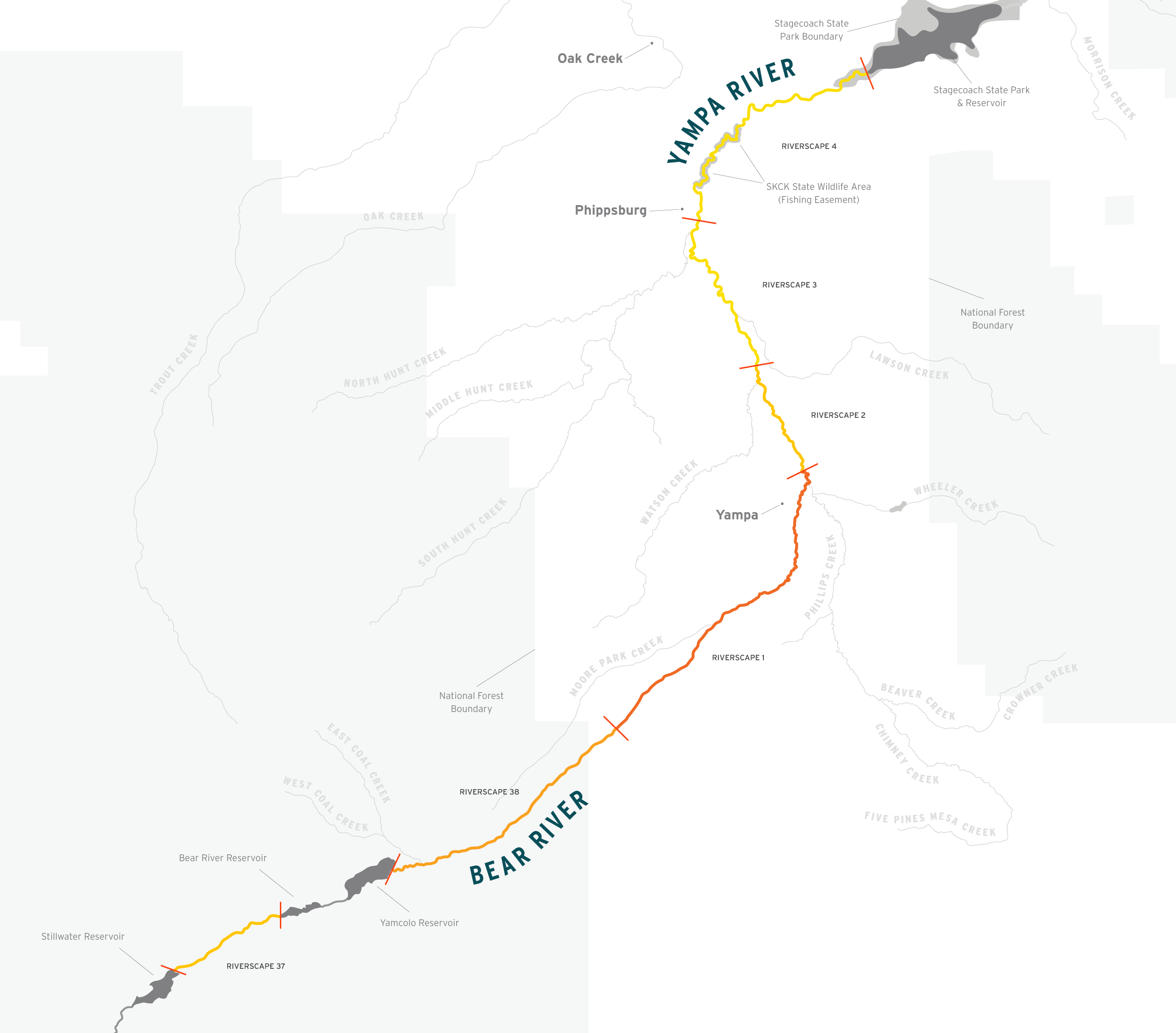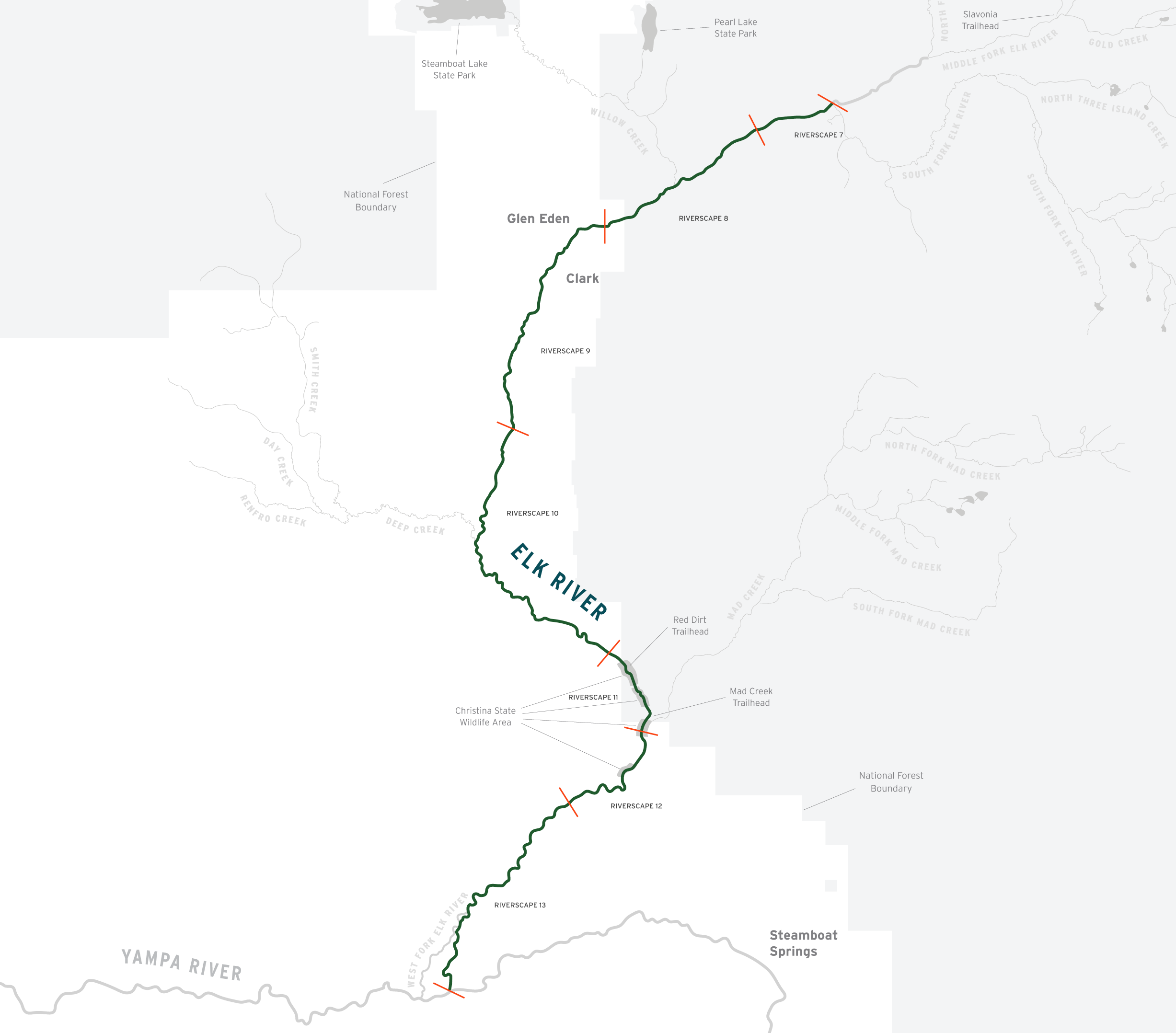
Middle Yampa Segment – Hydrograph Score 2022


Ecological Health & Function
CATEGORY: Flow Regime
Adequate peak flows are essential to river health and function. Snowmelt-driven peak flows during spring runoff are important for numerous watershed services, such as fishery support, riparian habitat quality, sediment flushing, water quality maintenance, recreation, aesthetics, and groundwater connection and recharge.
Score coming TBD
Score coming 2027
The flow data used for the Scorecard includes data modeled from streamflow gauges whose periods of record are approximately 40 to 60 years old. It also considers a streamflow trend analysis on the main stem of the Yampa River conducted by USGS over a 100-year time period.
Hydrograph examples are provided below. Example A shows the basic shape of a snowmelt-driven hydrograph, including seasonality of high and low flows. Example B shows the relationship between a typical hydrograph in a snowmelt-driven system and the snowpack itself.
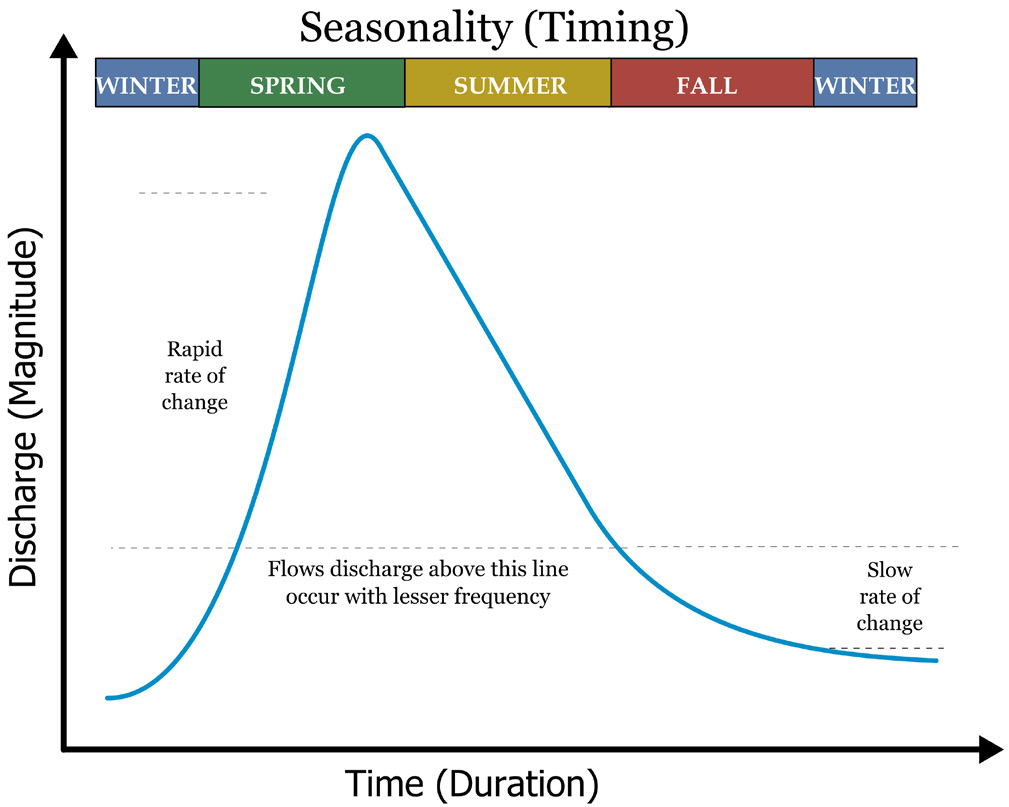
Credit: CWCB (Colorado Water Plan 2015)
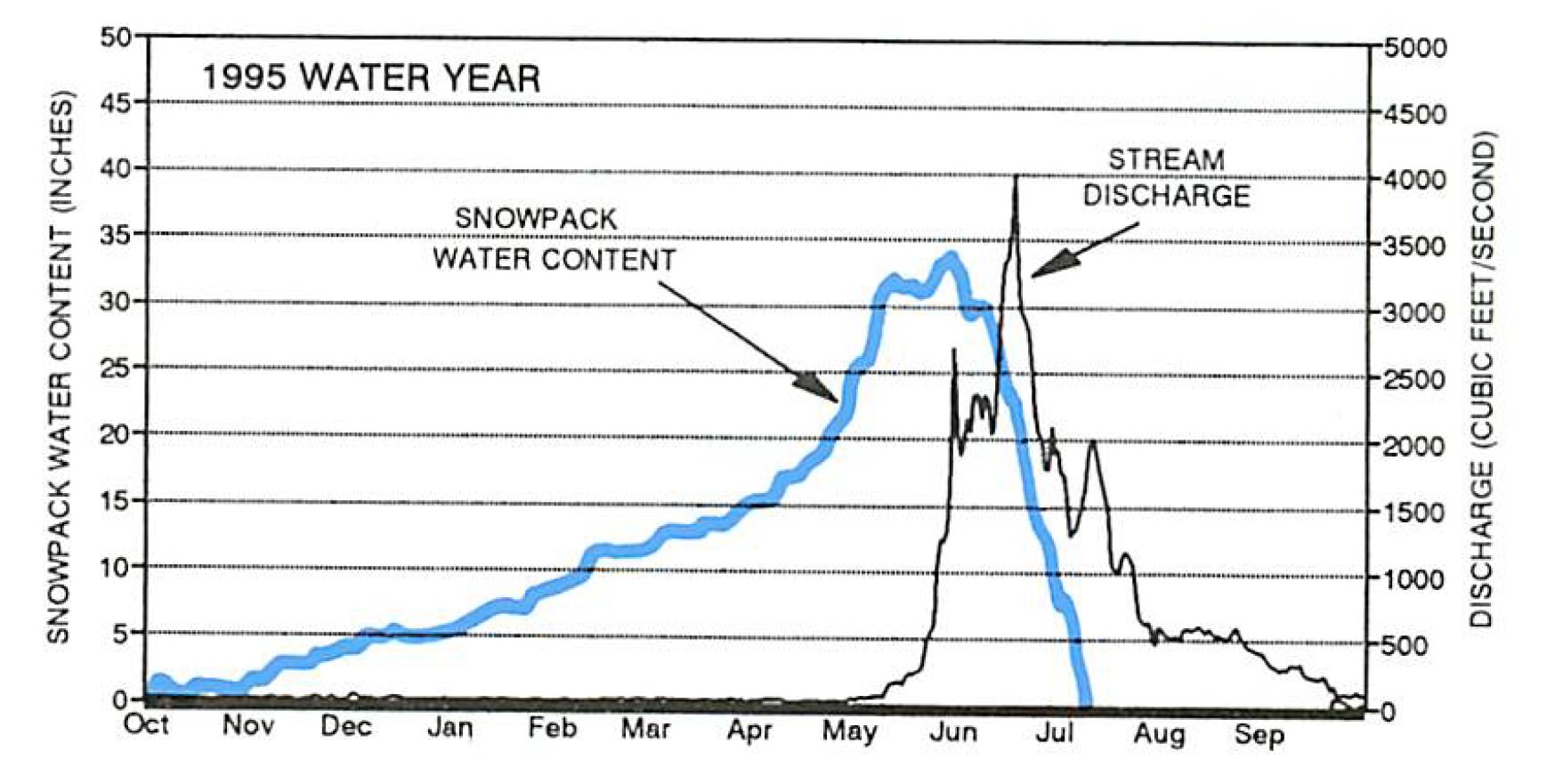
Credit: Doesken and Judson 1996
Beaver activity aids in slowing and spreading the water that flows through their complexes, often leading to the creation or expansion of wetlands. Beaver activity mobilizes wood into the system and stimulates riparian vegetation growth.
Without beaver dam complexes, snow and stormwater runs off the landscape at a faster rate, and causes stream channels to incise, eventually disconnecting them from their natural floodplain and degrading the riparian vegetation. Disconnected channels result in ecological degradation and make the landscape and ecosystem more vulnerable to disturbances from fire, erosion, and floods.
Beavers provide an important driver of long-term channel-floodplain connection, stability, and riparian corridor health. Historically, they were major drivers of the channel form, extent of wetlands, and biodiversity of the landscape.