
Middle Yampa Segment – Irrigation Season Score 2022
River Uses & Management

CATEGORY: Agriculture
Description Coming Soon
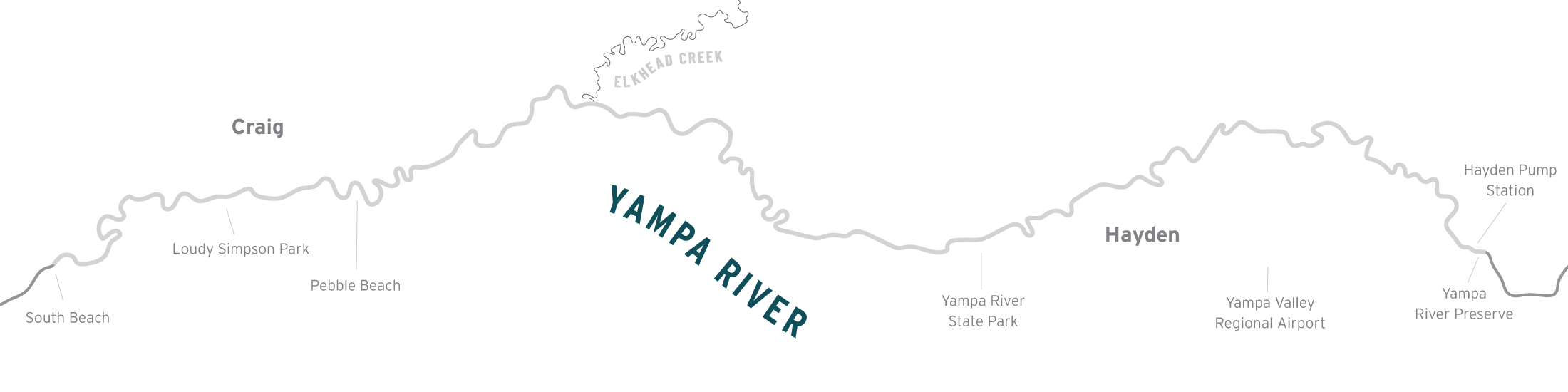
Agriculture was not scored for the Middle Yampa Segment
Agriculture was not scored for the Steamboat Segment
Agriculture was not scored for the Upper Yampa Segment
Agriculture was not scored for the Elk River Segment
Score coming TBD
Score coming 2027
The 100th meridian is the longitudinal (north-south) line that divides the arid west from the moist east. West of the 100th meridian, annual rainfall is scarce, and irrigation is required to sustain crops. East of the 100th meridian, abundant water is the norm, average annual precipitation typically exceeds 20 inches, and agricultural lands require no irrigation beyond rainfall. Because of this difference in water availability, two “doctrines” emerged to manage the human use of water.
In the eastern US, water use is tied to the land under the Riparian Doctrine, which allows landowners adjacent to the river or stream to divert water for reasonable use. The landowners do not own a water right, but they have a right to use the water for reasonable uses. Because the right to use the water is tied to the land, it is not forfeited if a landowner does not use the water; new reasonable uses can be implemented at any time by the landowners along the waterway.
The Riparian Doctrine is in direct contrast to the Doctrine of Prior Appropriation, which governs human water use west of the 100th meridian. As settlers of the west faced the reality of water scarcity, this doctrine, also known as “first in time, first in right,” was created to manage the many “straws” pulling from the west’s streams and rivers. Under the Doctrine of Prior Appropriation, the first user to divert water and put it to beneficial use has the senior claim over later water users, regardless of whether their land is adjacent to the river. The most senior water rights holders have first dibs on water use, and users may take water in order of priority until the water is gone. Water rights are not tied to the land, and it is possible that a landowner adjacent to a river or stream would not be permitted to divert water under this system if their water right is junior or if they do not own water rights.