River Uses & Management

Flow Regime

CATEGORY: River Management

hydrograph indicator

River Infrastructure Indicator

The river infrastructure indicator can measure manmade infrastructure on a river to divert water from the river, address erosion, protect adjacent land infrastructure, and/or allow for crossing of the river.

River infrastructure can include but is not limited to:

  • Push-up dams (river bed substrate)
  • Dams (concrete)
  • Diversion structures and headgates
  • Road crossings (bridges, culverts, or low-water crossings)
  • Pump structures
  • Bank hardening or erosion control efforts such as cross vanes or J hooks

For the YRSP, the river infrastructure indicator addresses the state of water diversion infrastructure as it relates to the structure’s ability to deliver water to the structure owners, allow for fish passage, offer safe passage for recreational boaters, and support river health as much as possible. Infrastructure evaluation for select structures throughout the Yampa basin was completed in 2020 by J-U-B Engineers and Wilson Water Group as part of the Yampa Basin Integrated Water Management Plan.

River Infrastructure score by Segment

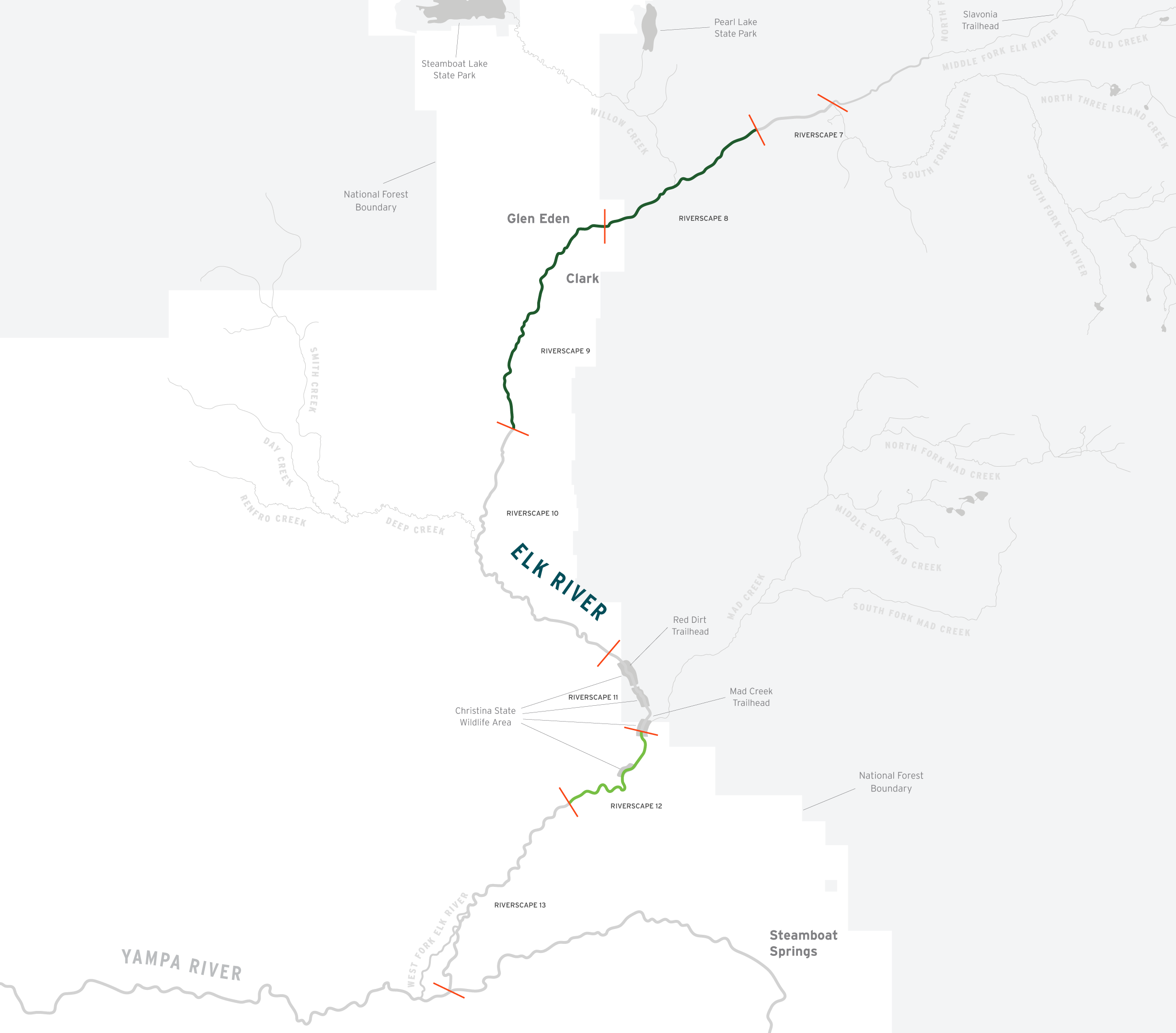
Elk River
Segment

Score coming 2026

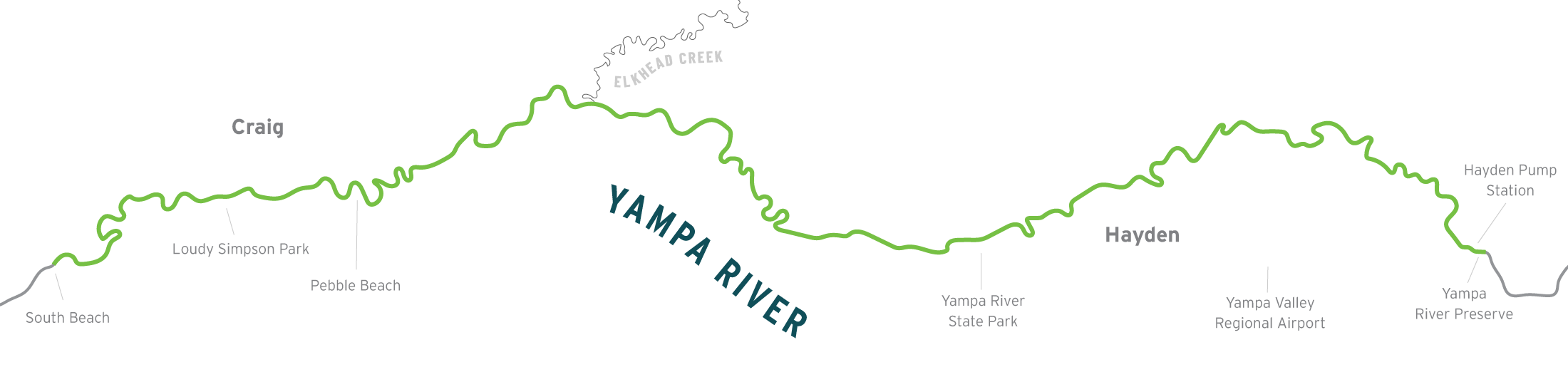
Lower Yampa
Segment

Score coming 2027

Did you know?

How Do (Concrete) Dams Impact Rivers?

Manmade dams and reservoirs significantly alter natural river systems, often at the cost of native species and healthy ecosystems. Here’s how:

1. Flow Disruption
Dams reduce flows by holding water back, but they also change the natural flow rhythm of rivers—its timing, frequency, and intensity. Native fish and plants have evolved to depend on this natural rhythm, which in the Yampa is characterized by spring pulse flows as the snowpack melts, followed by base flows in the late summer, fall and winter. When the natural flow regime is disrupted, invasive species often move in and take over.
2. Sediment Starvation
Reservoirs trap sediment, the transport, erosion, and deposition of which is vital for healthy rivers. Sediment-starved water coming out of a reservoir is known as “hungry water” because of its greater kinetic energy and erosive power. Downstream, this sediment starvation exacerbates erosion and limits the deposition of new cobble bars.
3. Loss of Woody Material
Dams block the flow of logs and branches downstream, which are essential components of a healthy river along with water and sediment. Large wood stranded on bars or in the channel alters the flow of water, creating diverse habitats and absorbing the energy of floodwaters. Wood in rivers also contributes nutrients to the system, supporting microbial and macroinvertebrate communities that form the basis of the aquatic food chain.
4. Ecosystem Impacts
The flooding of river valleys for reservoirs and the release of water stored behind a dam has negative impacts on the ecosystem that include loss of wetlands and riparian plants, loss of biodiversity, channelization and downcutting of the streambed, lowered water table, and degraded water quality. In the Yampa Basin, blue-green algae blooms are a water quality concern in local reservoirs, as are warmer water temperatures coming out of Lake Catamount.

The negative impact of dams and reservoirs can be mitigated to some extent through:

  • placement of dams high in the headwaters where their impact is limited to a smaller area,
  • careful management of water releases to mimic natural flow,
  • and coexistence with beavers in the watershed.

Beavers help to mitigate the negative impacts of human infrastructure on the ecosystem.

Did you know?

“Use It or Lose It” is not absolute…

The Colorado water law maxim “use it or lose it” is often blamed for preventing water users from taking steps to divert less water, either to benefit the environment or ease the stress of too-much demand on an overtaxed system. The misinterpretation of this aspect of Colorado water law is responsible for many water users’ reluctance to participate in programs designed to leave more water for the river.
Maximizing diversions does not protect the water right:
The transferable value of a water right depends upon the amount of water evapotranspirated by the crops, not the amount of water diverted. Water rights holders can implement efficiency measures such as ditch-lining or switching to sprinkler irrigation without putting their water right in jeopardy, as long as they continue to irrigate the same acreage.
There are layers of protections against abandonment:
If a water right is not used for 10 years, the Colorado Division of Water Resources will add that right to the abandonment list. There are multiple layers of protections for water rights holders against abandonment, and it is much harder to lose a water right than most water rights holders understand. Most importantly, non-use does not necessarily constitute abandonment if there is no intent to abandon and/or the non-use is due to destruction of a headgate in a flood, for example.

What else goes into the scoring?