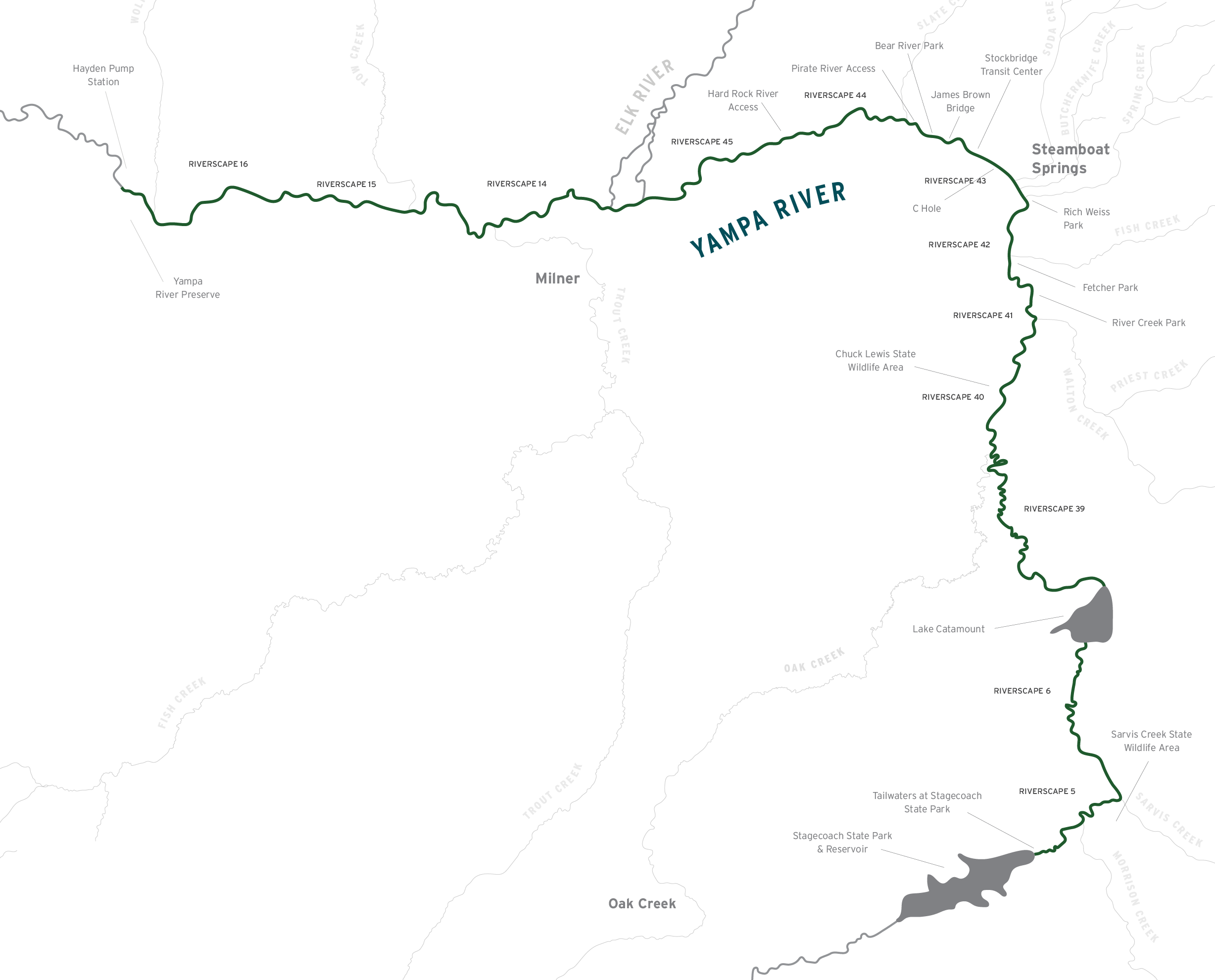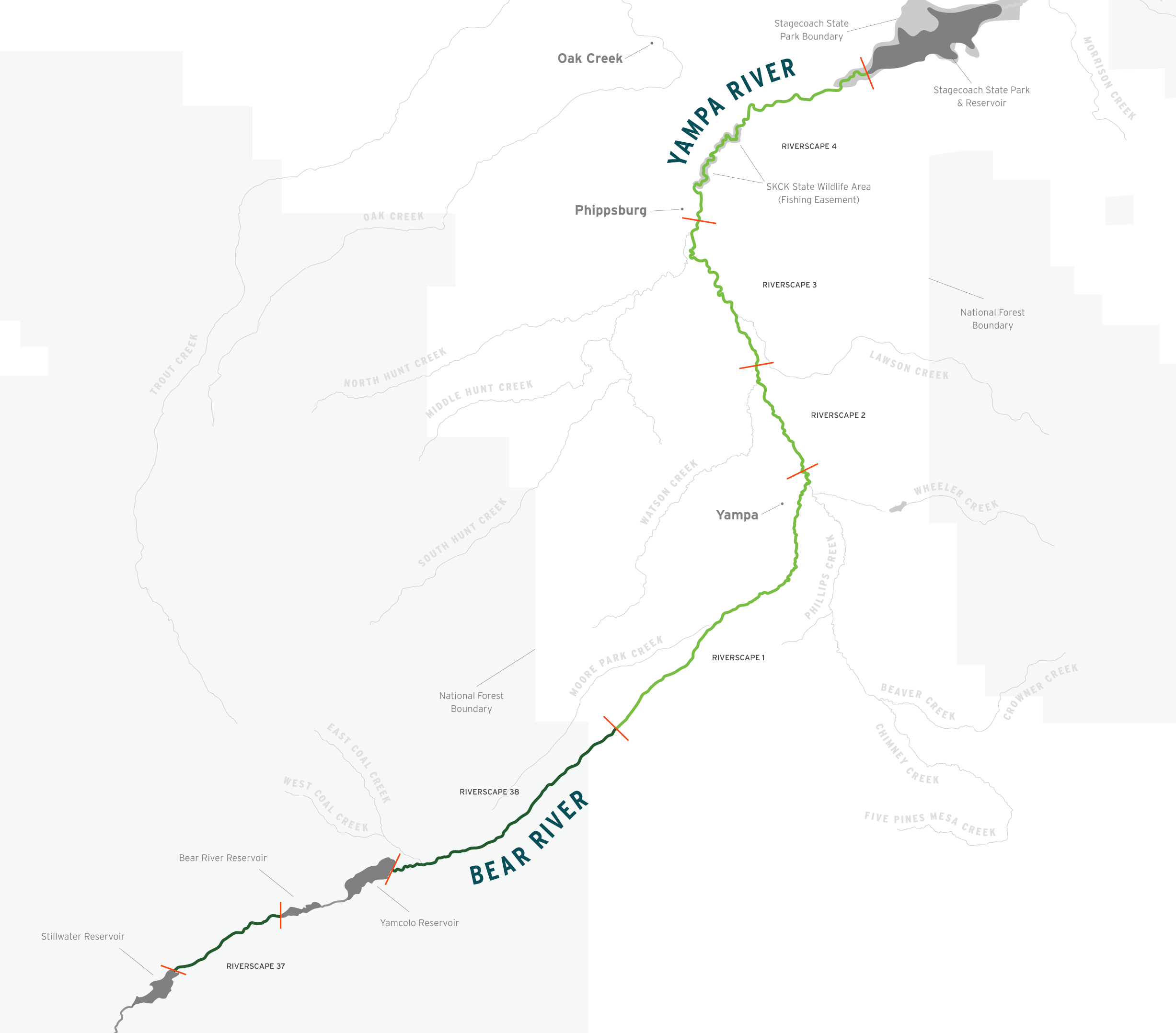
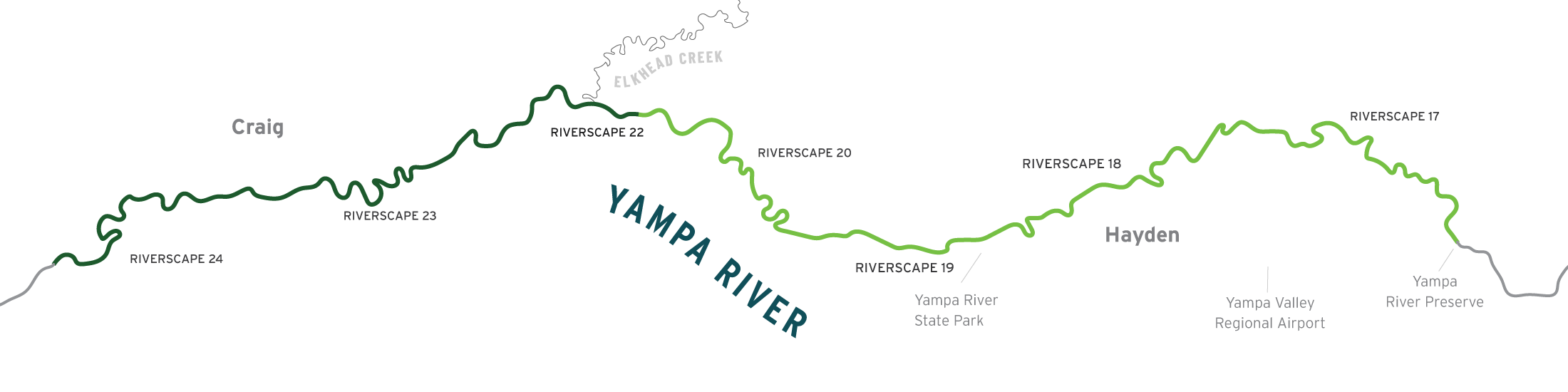
Middle Yampa Segment – Nutrients Score 2022

Ecological Health & Function

CATEGORY: Water Quality
Nutrients in stream water provide essential food for plants and animals. They occur naturally due to processes such as weathering and erosion, breakdown of organic material, and atmospheric deposition. Nutrients in surface waters can also result from human activities such as fertilizer application, runoff from agricultural and urban areas, effluent from wastewater treatment, seepage from septic tanks, detergent, animal waste, and fuel combustion. In the last decade, concerns about cyanobacteria and associated cyanotoxins have been expressed by stakeholders in the Yampa River Basin as algal blooms have been reported in local lakes and reservoirs, so this indicator will remain important to evaluate for the Scorecard.
Score coming 2026
Score coming 2027
Plants need sunlight and nutrients like water, carbon dioxide, oxygen, nitrogen (N), and phosphorus (P) to grow. Of these essential inputs, N and P are limited in ecosystems and thus control a plant’s growth. Added N and P from cow manure or fertilizers will increase crop yields or grow grass for golf courses and homes, but the excess runs off into rivers and reservoirs, where it stimulates algal blooms.
Short-lived algae die and are decomposed by bacteria that require oxygen to fuel their metabolism. This sudden increase in decomposition sucks oxygen out of water, creating harmful hypoxic, or low-oxygen, conditions. Fish and other aquatic organisms may not breathe air, but they require oxygen to survive and cannot tolerate hypoxic conditions. Toxic blue-green algae, a type of bacteria themselves, can thrive in low-oxygen environments where they produce harmful toxins. Toxic algae blooms have been documented in the Yampa Basin in Stagecoach Reservoir, Elkhead Reservoir, and Steamboat Lake, but the source of nutrient pollution is still unknown.